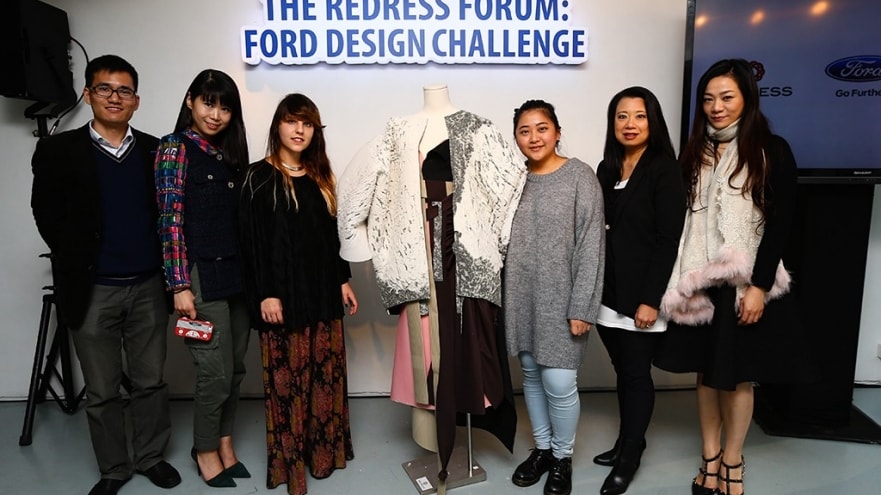
- Ten emerging designers from across Asia and Europe transformed sustainable materials from Ford vehicles into fashion statements during Hong Kong Fashion Week
- Veronica Lee from Malaysia and Amandah Andersson from Sweden named winners of The Redress Forum: Ford Design Challenge, for designing the most innovative upcycled statement piece
Ford Motor Company and Redress announced Veronica Lee from Malaysia and Amandah Andersson from Sweden the winners of The Redress Forum: Ford Design Challenge. Held on Jan. 19, the event challenged emerging designers to create fashion pieces with sustainable materials used in Ford vehicles and textile waste.
The design challenge was organized by Ford Motor Company in collaboration with sustainable fashion charity organization Redress with the purpose of highlighting the importance and impact of adopting sustainable design thinking and materials in the fashion and automotive industries.
During The Redress Forum: Ford Design Challenge, 10 emerging designers from Hong Kong, mainland China, Taiwan, Malaysia, Singapore, United Kingdom, France, Sweden and Denmark transformed sustainable seat fabrics from Ford vehicles into a couture design. This was done through the creative process of “upcycling”, which converts wasted and abandoned materials into something new and of higher quality. The 10 designers taking part were The EcoChic Design Award 2014/15 finalists.
The winning piece, created entirely from an earthy color palette of Ford seat fabrics by the designers, was inspired by the bamboo scaffolding at the Hong Kong Legislative Council. Their asymmetric design is at once athletic and elegant, combining different textures and fabrics. “We scored the foam on the reverse side of the seat fabric, revealing color and texture reminiscent of the stone walls of the legislature,” said Andersson. The award-winning, architecturally inspired outfit was handcrafted in three hours.
Emily Lai, manager, Color and Materials Design, Ford Asia Pacific, said, “We would like to congratulate these budding designers for successfully rising to this challenging task of creating fashionable outfits out of a technical material like car seat fabric.”
She went on to explain, “Designers have the power to affect environmental waste through their designs and the design process. This can minimize environmental impact through creative use of materials and other innovations. All the creations we have seen today are examples of this, and we applaud each participant for rising to the challenge.”
Commenting on the success of the project, Christina Dean, founder and CEO, Redress, said, “Waste-to-landfill is a big issue our planet faces and we at Redress work to raise awareness about how we can reduce this. The Redress Forum: Ford Design Challenge was a great demonstration of how sustainable design thinking is as relevant for fashion as it is for the automotive industry.”
“The opportunity to work with recycled seat fabrics was an exciting experience. I never expected plastic bottles could be transformed into appealing materials and eventually into such an unexpected garment,” said Lee, a recent graduate in fashion design from the Raffles Design Institute in Singapore.
“I believe upcycling and design innovation, both in cars and in fashion, are an important step towards a sustainable future for all of us,” said winner Andersson, currently developing her own brand in Stockholm.
Ford’s sponsorship of The EcoChic Design Award 2014/15 is in line with the company’s long-standing and growing commitment to sustainability. Since 2001, a dedicated team of Ford engineers has worked to incorporate sustainable materials into vehicles while upholding Ford’s strict quality and performance standards. Today, the company uses content such as recycled plastic bottles, denim, kenaf, wheat straw, soy beans and castor oil to help reduce consumer and industrial waste, decrease depletion of natural resources and lower energy consumption. Ford also is working with Heinz to investigate the use of tomato fibers in developing sustainable, composite materials for use in vehicle manufacturing.